
UAE Schools Resume Without Buses: Ministry Clarifies Flexibility, Fees and Rules
Introduction
Schools across the United Arab Emirates are preparing to reopen for in-person learning from April 20, 2026. After more than a month of distance education, students, teachers and parents are getting ready to return to classrooms.
However, this return comes with an important change school bus services will not be available immediately. The Ministry of Education has announced that bus operations are temporarily postponed. To support families during this transition authorities have introduced flexible rules and clarified policies regarding attendance fees and safety.
What Are UAE Schools Resume Without Buses Services?
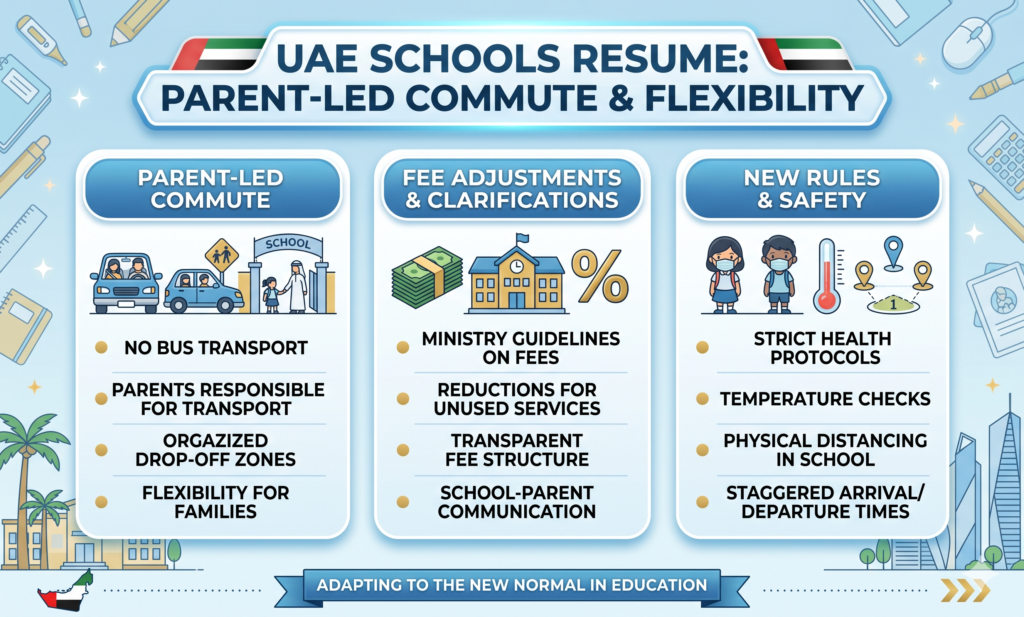
UAE Schools Resume Without Buses services means that students will return to physical classrooms but school transport (buses) will not be available for now. Families will need to arrange their own travel until bus services restart.
Here are some simple points to understand this clearly:
1. Physical Classes Start Again
Students will go back to school buildings and attend classes face-to-face with teachers. Online learning will reduce or stop for most students during this time.
2. No School Bus Facility
School buses will not operate temporarily. This means students cannot use school transport and must find other ways to reach school.
3. Parents Arrange Transport
Parents or guardians will need to drop and pick up their children. Some may use private vehicles, carpooling, or public transport depending on convenience.
4. Temporary Situation
This is not permanent. Bus services are paused for a short time and will restart once authorities confirm everything is ready and safe.
5. Flexible School Rules
Schools understand the difficulty and may allow flexible timings or attendance. Students won’t be strictly punished for delays caused by transport issues.
Temporary Challenges for Parents and Students
The absence of school buses creates difficulties for many families, especially those who depend on daily transport services.
Some common challenges include:
- Parents arranging private transport
- Increased travel time
- Managing office and school schedules
- Safety concerns for younger children
The government understands these issues and has asked schools to handle such situations with flexibility.
Flexibility in Attendance and Timings
To reduce pressure on families schools have been instructed to provide flexibility in attendance.
Key Points:
- Schools will review each case individually
- Late arrivals due to transport issues will be considered
- Absences may be handled with understanding
- Parents can communicate directly with school management
This approach ensures that students do not face academic penalties due to transportation problems.
How Schools Will Support Families
Schools are working closely with parents to make the transition smooth.
Support Measures Include:
- Adjusted school timings in some cases
- Special consideration for siblings
- Temporary hybrid or remote options (in certain cases)
- Clear communication through emails and apps
Educational institutions aim to ensure that “no student is left behind” during this period of change.
What About School Transport Fees?
One of the biggest concerns for parents is transport fees.
Public Schools:
- No transport fees are charged
Private Schools:
- Fees are regulated by local education authorities
- Policies may vary depending on the school
- Adjustments or waivers may be applied
Authorities have clarified that decisions regarding private school transport fees will follow approved regulations.
Safety Measures in Schools
Safety remains the top priority as students return to classrooms.
Preparedness Includes:
- Sanitized classrooms and facilities
- Trained staff for emergency situations
- Updated health and safety protocols
- Regular inspections and compliance checks
Authorities have confirmed that all schools are ready to provide a safe learning environment.
Why Distance Learning Was Introduced
Schools in the UAE shifted to online learning earlier due to regional security concerns linked to geopolitical tensions.
- Distance learning started in early March
- It was introduced as a precautionary measure
- Schools continued education through digital platforms
Now with improved conditions authorities have decided to resume physical classes.
Hybrid Learning and Flexibility
Even though schools are reopening flexibility remains an important part of the system.
Hybrid Options:
- Some private schools may continue hybrid learning
- Students unable to return immediately may attend online
- Schools can switch between online and offline modes if needed
This ensures continuity of education in uncertain situations.
Weekly Review of Bus Services
The suspension of bus services is temporary.
Important Updates:
- The situation will be reviewed every week
- Authorities will monitor readiness and safety
- Official announcements will inform parents about resumption
This ensures that transport services restart only when fully safe and prepared.
Impact on Nurseries and Kindergartens
The new rules apply to all educational institutions including:
- Nurseries
- Kindergartens
- Public schools
- Private schools
Parents of younger children may face more challenges but schools are expected to provide extra support.
Role of Education Authorities
Different authorities are working together to manage the reopening:
- Ministry of Education (MoE)
- Local education bodies
- Transport authorities
- School administrations
Their goal is to ensure:
- Safe reopening
- Smooth transition
- Minimal disruption to learning
Benefits of UAE Schools Resume Without Buses
Even though school buses are not available reopening schools still has many benefits for students parents and schools. Here are some simple points to understand:
1. Faster Return to Normal Learning
Students can go back to classrooms and learn directly from teachers. Face-to-face learning improves understanding and helps students focus better than online classes.
2. Better Student Interaction
Students can meet friends talk and work together again. This improves communication skills and makes learning more enjoyable.
3. Flexible Arrangements for Families
Schools are allowing flexible timings and attendance. This helps parents manage transport issues without putting too much pressure on students.
4. Reduced Overcrowding in Buses
Without buses there is no crowding during travel. This can improve safety and comfort for students in the short term.
5. Increased Parental Involvement
Parents dropping children to school get more involved in their daily routine. This helps parents stay connected with their child’s education and school activities.
6. Gradual and Safe Transition
Restarting schools without buses allows a step-by-step return to normal. Authorities can check safety and manage transport systems properly before full operations begin.
7. Encourages Responsibility
Students and families learn to plan their schedules and manage time better. This builds responsibility and discipline in daily life.
Conclusion
The reopening of schools in the UAE marks a positive step toward normal life. While the absence of school bus services may create temporary challenges the government and schools are working together to support families.
With flexible attendance rules clear fee policies and strong safety measures the transition back to classrooms is designed to be smooth and student-friendly.
Parents students and schools must cooperate during this period to ensure that education continues without disruption.
As authorities review the situation weekly, normal transport services are expected to resume soon. Until then, flexibility and understanding will play a key role in making this transition successful.