
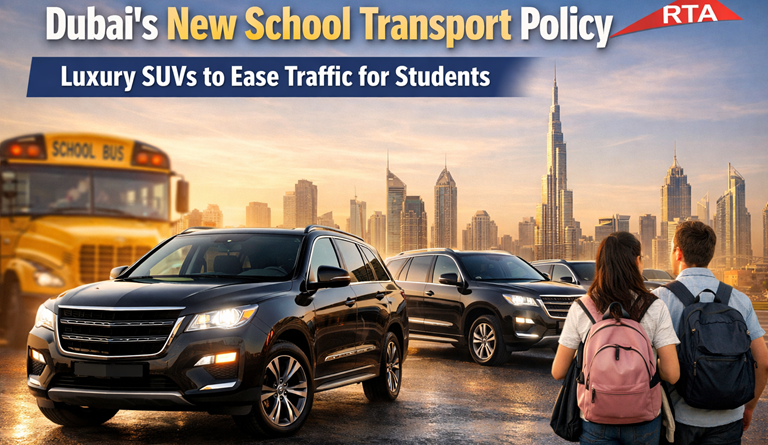
Dubai Launches New School Transport Policy: RTA Pilots Pooled SUVs to Reduce Traffic and Enhance Student Comfort
Dubai School Transport Policy Explained
Dubai has taken a bold step toward reimagining student mobility with the launch of a new school transport policy aimed at easing congestion and improving travel comfort for older students. The Dubai Roads and Transport Authority (RTA) has introduced a pilot program that replaces traditional yellow school buses with luxury pooled SUVs for students aged 14 years and above in selected high-traffic areas of the city.

A Modern Approach to School Transportation in Dubai
The pilot initiative is part of Dubai’s broader smart mobility and traffic management strategy. Instead of large school buses—often associated with long routes, multiple stops, and peak-hour bottlenecks—the new system deploys smaller, high-end SUVs operating on pooled routes. These vehicles are designed to move more flexibly through congested neighborhoods while offering a more comfortable experience for teenage students.
According to RTA officials, the program targets older students who typically attend secondary schools located in dense urban zones, where traditional buses contribute to road congestion during morning and afternoon peak hours.
Why Replace Yellow School Buses?
Traditional school buses, while effective for younger children, can pose challenges in crowded city corridors. The RTA’s pilot addresses several key concerns:
- Traffic Congestion: Large buses stopping frequently in narrow or busy streets often slow down traffic flow.
- Route Inefficiency: Fixed bus routes may not adapt well to changing traffic patterns.
- Student Comfort: Older students increasingly expect higher comfort and shorter travel times.
By contrast, pooled SUVs can take optimized routes, reduce idle time, and integrate better with existing traffic systems.
Key Features of the RTA Pooled SUV Pilot Program
- Eligibility: Students aged 14 years and above
- Vehicle Type: Luxury, air-conditioned SUVs with modern safety features
- Operating Areas: Selected congested districts in Dubai
- Routing System: Digitally optimized, pooled pick-up and drop-off points
- Safety & Compliance: Trained drivers, GPS tracking, and adherence to RTA safety regulations
The RTA has emphasized that safety standards remain uncompromised, with all vehicles subject to strict inspections and operational guidelines.
Benefits for Students, Parents, and the City
For Students
- More comfortable seating and quieter rides
- Reduced travel time
- A transport experience better suited to teenagers
For Parents
- Enhanced monitoring and tracking options
- Confidence in safety and reliability
- Potentially more flexible scheduling
For Dubai’s Roads
- Fewer large buses during peak hours
- Smoother traffic flow in school zones
- Better utilization of road space
Supporting Dubai’s Vision for Smart Mobility
This initiative aligns with Dubai’s long-term vision to adopt innovative, technology-driven transport solutions that improve quality of life. If successful, the pilot could be expanded to more areas or inspire hybrid models combining buses and pooled vehicles based on location and age group.
Urban mobility experts view the move as a forward-looking experiment that balances efficiency, sustainability, and user experience—key pillars of Dubai’s transport strategy.
What’s Next?
The RTA will closely monitor the pilot’s impact on traffic congestion, student punctuality, safety metrics, and parent feedback. Based on performance data, authorities may refine the model or scale it across the city in the coming academic years.
Conclusion
Dubai’s new school transport policy marks a significant shift from one-size-fits-all solutions to smart, age-specific mobility planning. By introducing pooled luxury SUVs for older students, the RTA aims to reduce congestion, modernize school travel, and set a benchmark for urban student transport in global cities.
Pingback: Emirates Dubai Manila Flights Get Major Boost With 4 New Weekly Services